You make food with care. That isn't always enough for people to find you, understand why you're worth your price, and come back. That's what marketing is for – and it's far simpler and more human than the word makes it sound.
This introduction is written for you who produce or sell food on a small scale: the farm shop, the producer who delivers direct, the café, the small bakery, the restaurant. We take it from the ground up, without jargon, and you need neither a big budget nor an interest in technology.
Marketing or sales?
The words often get mixed up, but they answer different questions:
- Marketing is about being seen and getting chosen. Making sure the right people know you exist, understand what makes you special, and pick you over the alternatives.
- Sales is about making the deal. Where you sell, at what price, on what terms – and how much is actually left for you.
Marketing creates the interest; sales turns it into money. You need both, but they are different crafts. This is the marketing section – sales has its own section: Sales, covering channels, price, the sales conversation and terms.
First: the foundation is your brand
All marketing rests on one thing – knowing who you are and what you stand for. That's your brand: not the logo, but the feeling and the promise people associate with you. We build that foundation separately in the module Brand and principles (module 3). If you haven't done it yet, it's fine to start here anyway – but keep in mind that the clearer your brand is, the easier everything below becomes.
What marketing actually is
Forget advertising and campaigns for a moment. Once the foundation is in place, marketing really only comes down to three things, in the right order:
- Knowing who you do it for – your customer. Who truly wants what you make, and why?
- Meeting them along the journey – from discovering you to coming back and telling others.
- Using the right digital tools – search, social media and website – but only once the first two are in place.
Most people jump straight to point three: "we should probably be on Instagram". Then they wonder why it doesn't deliver. This section takes you in the right order.
Why marketing usually fails
It's almost never the budget. It's one of these:
- Not knowing who the customer is, so the message fits no one.
- Fuzzy goals – "being more visible" is not a goal.
- Jumping between random ideas with no thought behind them.
- Not understanding how the digital platforms actually work, so the effort feels pointless.
The solution is not to do more. It's to work with intent. A little research, a clear customer, a couple of simple goals – then choose a few tools and run them well.
An idea to carry with you: stop chasing the customer who will buy tonight. Build relationships with tomorrow's regulars. Marketing that builds relationships beats marketing that begs for a quick sale.
Five steps – at your own pace
You can see the steps right here. Take them in order if you can – they build on each other, from who your customer is to being visible where customers look – but you can also jump to where it itches most.
Each step comes with worksheets you can download and fill in – or use your favourite AI tool as a buddy to help you. You don't have to keep it all in your head: every step leaves something concrete behind – the segment cards, the journey map, your Google profile, the content calendar with its monthly check, the website fix list. Together they are your marketing in practice.
Don't forget what happens off the internet
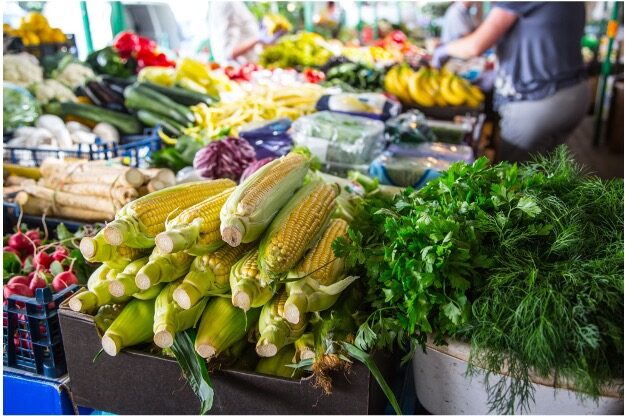
Most of the steps are about the digital side, because that's where most people feel unsure. But for a food producer the physical side matters just as much: the sign by the road, the packaging, the table at the market, a collaboration with the café in town, daring to ask a happy customer to spread the word. It counts – and it belongs in your planning. Write the physical channels in wherever you plan, e.g. on the My plan tab of the content calendar.
Is all this really for me?
Yes – but you don't have to do everything yourself, and not all at once. Just because something is possible doesn't mean you have to master it. Brand design, websites, social media – there is help to bring in when needed. What matters most is that you understand the basics, so you can make wise decisions about where your time and money do the most good.
Start with one thing you can do this week. Then the next.